Water around a house is one part of foundation care you can do something about yourself. The ASCE Texas Section’s repair guidelines give it a full section: slope the ground away, send roof water well clear, watch the trees, and keep soil moisture even without overwatering. Here is what they say, what Tyler’s weather adds, and what the fixes cost.
Which way should the ground slope?
Away from the house, on every side. The ASCE Texas Section guidelines call for “a minimum slope of 5 percent (i.e. 6 inches in 10 feet) away from the foundation” for the first 10 feet all around. You can check it yourself: 10 feet out from the wall, the ground should be at least 6 inches lower.
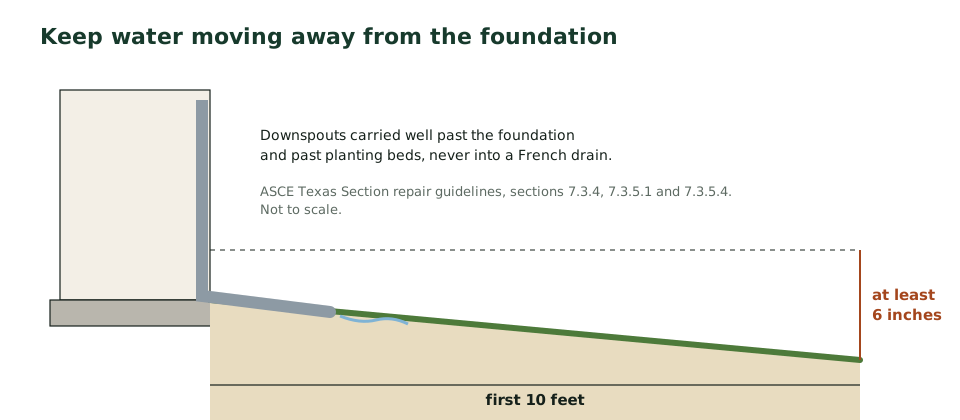
Regrading around a whole house runs $1,000 to $3,000, from a single published source. If the fix includes a retaining wall in Tyler, the city says “A permit is required for all retaining walls.” Walls over four feet need engineered plans signed and sealed by a licensed engineer.
Out in the county, grading can need a permit too. In unincorporated Smith County, the flood rules count “filling, grading, paving, excavation” as development, and development in a mapped flood hazard area needs a county permit. Call Road & Bridge at (903) 590-4801, and see the Flint and Gresham page.
Where should the downspouts empty?
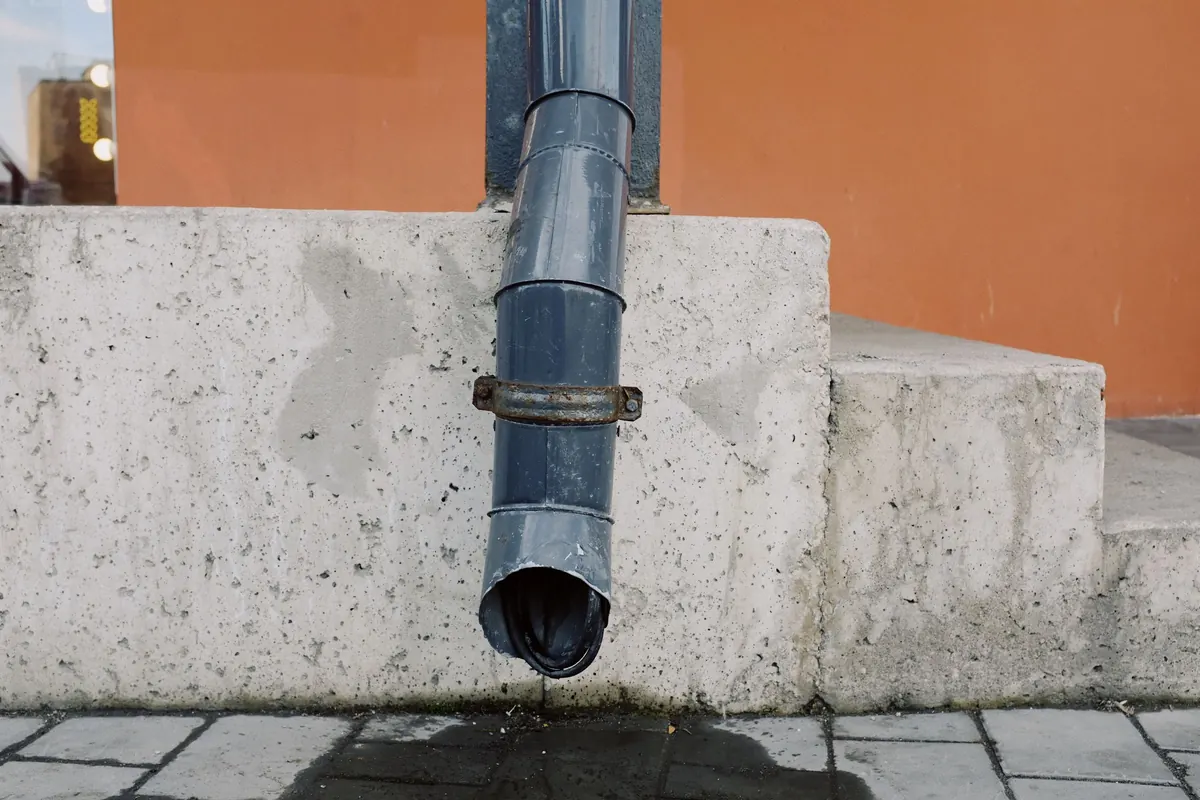
Well away from the house. The guidelines say downspouts “should be extended well past the edge of the foundation, past the edge of abutting planting beds, and into well-drained areas.” Water dropped into a flower bed next to the wall does not meet that test.
They also say “Downspouts and surface drains should not be connected to perforated pipe subsurface drainage systems.” A French drain is a buried perforated pipe, so piping roof water into one goes against the guideline. Prices for gutters and French drains are in the table further down.
Should you water your foundation?
Sometimes, but carefully. The guidelines say “maintaining near uniform soil moisture conditions near all sides of the foundation may be beneficial.” In the same section they warn: “Caution should be advised against excessive watering.” Even moisture all around is the goal, not wet soil on one side.
Watering also shows up in warranty fights. On a legal question site, a Little Elm homeowner said a company would not honor its warranty “due to not watering.” A Houston homeowner’s warranty was voided partly because “Soaker hoses weren’t installed.”
Read the watering clause before you sign, and keep a simple record of what you do. Our warranty guide covers the other clauses.
Are the trees near your house a problem?
They can be. The guidelines say “Trees or large shrubs near a foundation may cause soil shrinkage under the foundation.” A root barrier, a buried wall that blocks roots, runs $1,500 to $5,000 per installation. We found no published per-foot price, so ask how a bid was figured.
Get the barrier’s depth, length and location in writing. Ask who decided them, and why.
How much rain does Tyler get, and when?
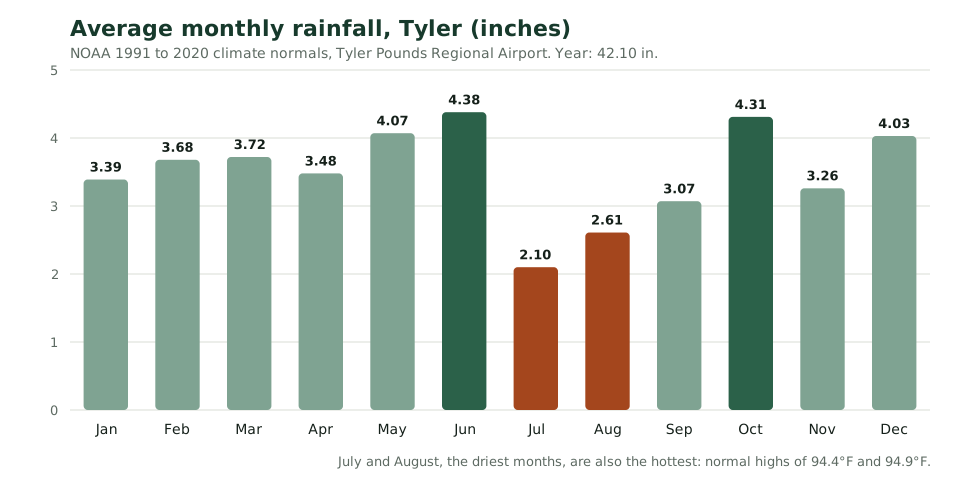
Tyler averages 42.1 inches of rain a year, but not evenly. June (4.38 inches) and October (4.31) are the wettest months. July (2.10) is the driest, and August is the hottest, with an average high of 94.9°F. The totals also swing hard from one year to the next.
In 2011, Tyler Pounds Field recorded 25.00 inches of rain, 140 days of 90°F or more and a high of 110°F. The U.S. Drought Monitor showed exceptional drought over all of Smith County on 11 weekly maps in a row, from August 9 to October 18. In 2015, the same station recorded 68.06 inches.
Texas’s State Climatologist wrote that “The 2011 drought in Texas was unprecedented in its intensity.” He also noted that “By early fall, trees in central and eastern Texas were showing widespread mortality.”
The 2022 drought was shorter and sharper. It peaked in mid-August, with about two-thirds of the county in extreme drought for two weeks, and broke later that month.
The county soil survey defines shrink-swell as “the shrinking of soil when dry and the swelling when wet.” The ASCE guidelines make the same point for the state: “Texas has large areas with clayey soils that shrink and swell with changes in soil moisture content.” Drainage and even watering are the parts of that cycle you can influence. Our soils guide covers the soil side.
Does drainage matter when a house is inspected or sold?
It does. A Texas home inspector must report crawl space drainage “that is not performing” as a deficiency. The state’s seller’s disclosure form asks whether the seller knows of “Improper Drainage.” So drainage comes up when a house changes hands, not just when it rains.
For a pier and beam house, the crawl space is part of the drainage picture. Our house leveling page covers what an inspector can and cannot see down there.
What do drainage fixes cost?
Published figures put a foundation company’s drainage correction package at $2,000 to $8,000. Single fixes, such as regrading, can cost less. All of these are industry estimates. No Tyler company publishes its prices, so use them to judge a written bid, not to predict one.
| Work | Typical price | Where the figure comes from |
|---|---|---|
| French drain | $10 to $50 per linear foot; $2,000 to $7,000 for a typical job | Angi (2,203 projects), HomeGuide |
| Gutters | $7 to $25 per linear foot; $2,200 to $5,000 for a house | HomeGuide (Oct 2025), Fixr (Jan 2025) |
| Regrading around the house | $1,000 to $3,000 | HomeGuide (Jan 2026, one source) |
| Surface drains | $10 to $40 per linear foot | Angi (2,203 projects) |
| Root barrier | $1,500 to $5,000 per installation | Stratum, Thomas Engineering |
| Drainage correction package | $2,000 to $8,000 | Olshan, Stratum, Two Brothers, Bob Vila |